Experience · Jan 2022 – Apr 2026
Wound³
Medtech company turning iPhone depth data into measured 3D wound models for remote monitoring. Selected as the lead software vendor for the ARPA-H funded AiCCESS wound care study; ceased operations in 2026 after a shift in US federal funding priorities.
Founder and Chief Technology Officer. Led the technical build of a 3D wound-imaging product and ran the company.
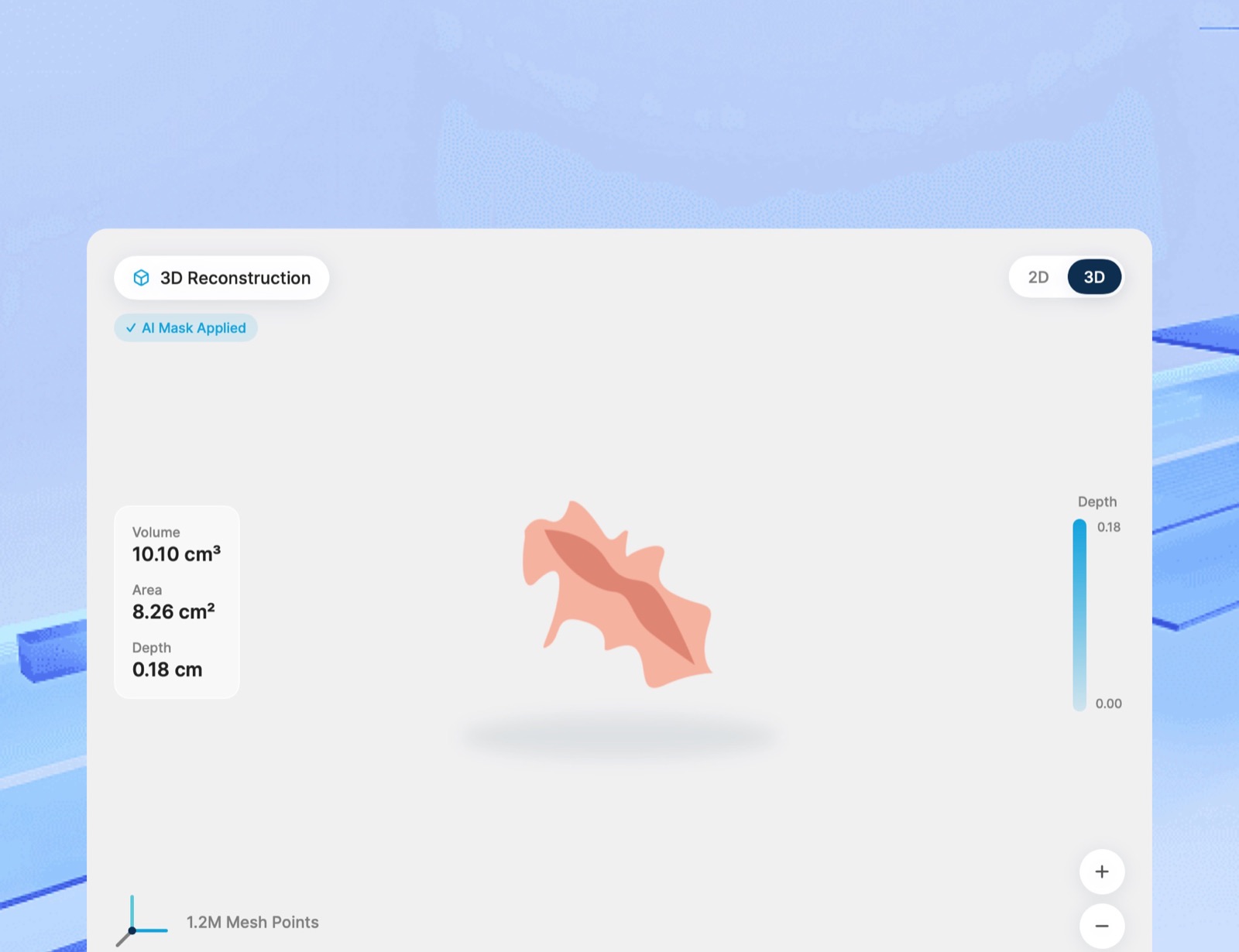
- raised
- ~$1.1M
- team members led
- 8
- hospitals in the pilot
- 3
- proposed SOW for a 14-hospital rollout
- $3M USD
Background
Wound³ grew out of my time in Dr. Burrell's lab, where one of my Level 7 co-founders and I recognized how archaic modern wound care remains and how far it lags technologically: wounds are still measured with rulers and cotton swabs, largely in person, and wound care cost Canada more than $12 billion in 2023. We set out to capture accurate 3D wound models with an iPhone, in hospital or at home, so clinicians could monitor healing remotely, charting could be automated, and patients would need fewer visits.
Overview
Wound³ raised about $1.1 million, completed a series of accuracy studies, and was deployed in several local clinics. It also launched two independent clinical studies: usability at the Glenrose Rehabilitation Hospital and real-world measurement at a private clinic. Neither had concluded when the company closed.
Our most significant contract was as the lead software vendor for Project AiCCESS, an ARPA-H funded wound care study with Rutgers University that set out to build the largest surgical wound dataset ever assembled. Wound³ owned data capture in and out of hospital, cleaning and anonymization, and storage and distribution. We won it on capabilities beyond measurement: capture quality checks that reject a poor angle, distance, lighting, or focus; automatic wound masking; and a local-first architecture that keeps working without connectivity, including in operating rooms.
Projects
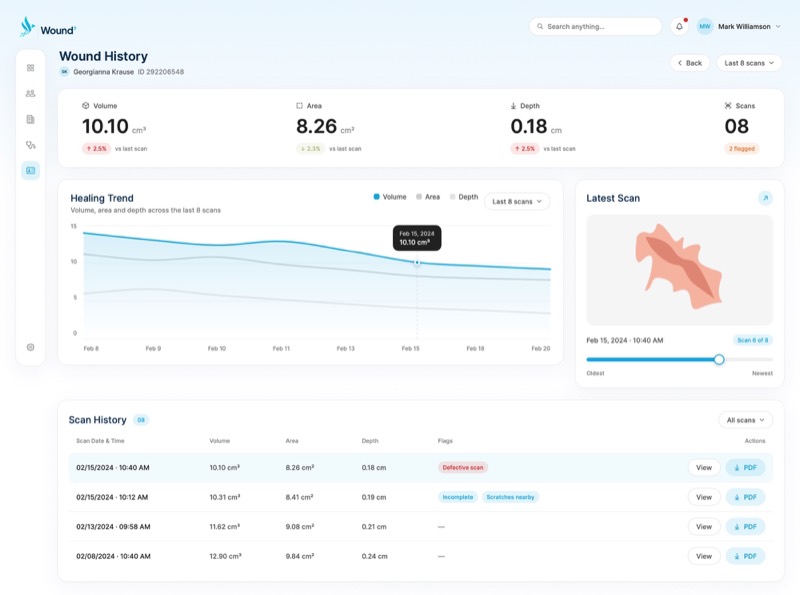
Wound³ software: iOS capture app, 3D engine, backend, and web app
The Wound³ product: an iOS capture app that turns iPhone depth data into measured 3D wound models, an on-device compute pipeline, a Python backend on AWS, and a React web app for clinicians.
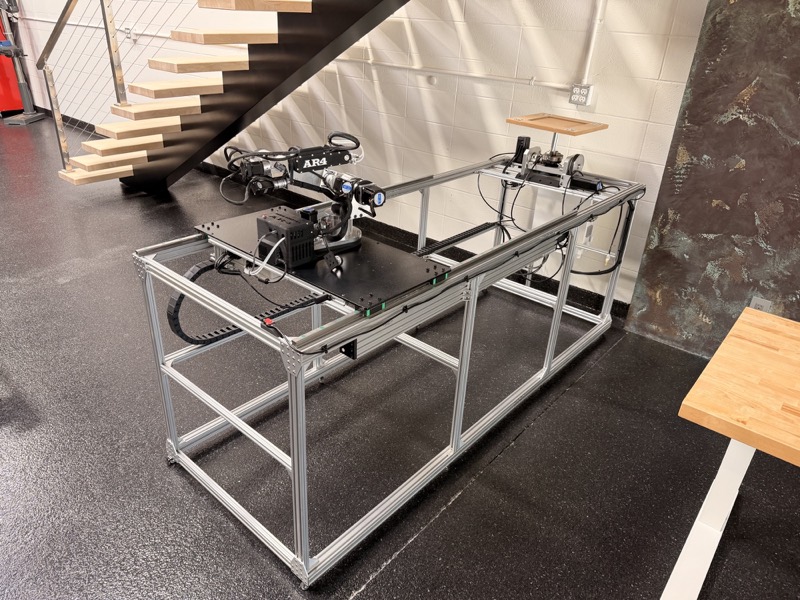
Automated 3D-capture accuracy rig (modified CNC, then AR4 robotic arm)
Automated test rig for measuring how 3D-model accuracy varies with capture distance and phone sensor generation, by scanning objects of known size at programmed positions. The robotic-arm version was my mechanical engineering capstone project.
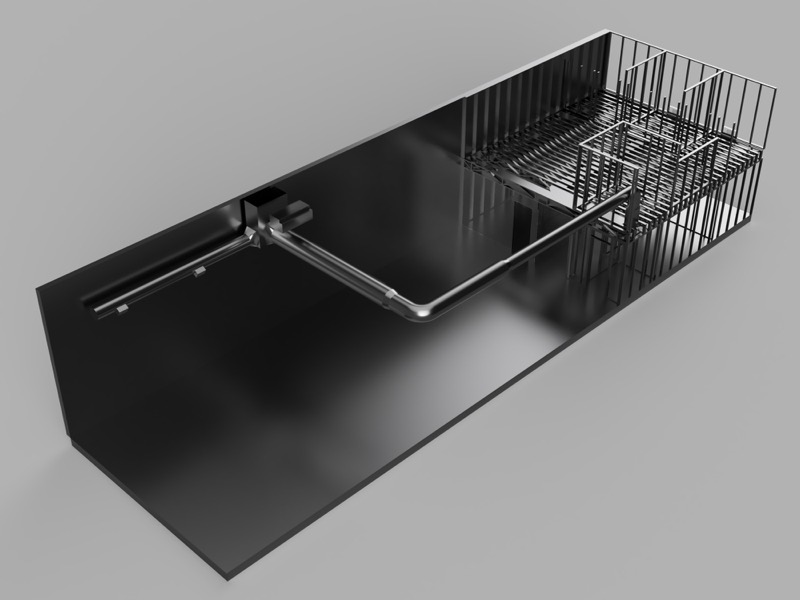
Wound³ headquarters: 2,200 sq ft industrial bay build-out
Conversion of a 2,200 sq ft industrial bay into Wound³'s headquarters: the company's main office and workspace, on two storeys, built out over about 12 months.
My contribution
As CTO I built the iOS app in SwiftUI end to end, much of the backend (Python and FastAPI on AWS, with Postgres on RDS and S3 storage), parts of the on-device compute pipeline in Swift and C++, and much of the React web app. I managed six software developers across the 3D engine and R&D (three), backend (one) and frontend (two). On the hardware side I designed and built the automated capture rig used to validate accuracy.
Highlights
- Founded a medtech startup building software that turns iPhone depth data and camera intrinsics into measured 3D wound models; wrote the entire iOS capture app (SwiftUI), much of the backend (Python, FastAPI, AWS with Postgres and S3), parts of the on-device compute pipeline (Swift, C++), and much of the React web app.
- Managed a team of 6 software developers: 3 on the 3D engine and R&D, 1 backend, 2 frontend.
- Selected as the lead software vendor for the ARPA-H funded AiCCESS wound care study; delivered a 3-hospital pilot and authored the SOW for a 14-hospital rollout.
- Raised about $1.1M from the University of Alberta, Alberta Innovates, private sources, and other grants, and led a team of 8, including 6 software developers (3 on the 3D engine and R&D, 1 backend, 2 frontend).
- Raised about $1.1M from the University of Alberta, Alberta Innovates, private sources, and other grants, and led a team of 8.
- Won the Shark Pitch competition at the WHS SAWC conference in Phoenix, 2022.
- Won the NextGen pitch competition, 2024.
Lessons learned
- Customer concentration. AiCCESS was by far our largest opportunity, so we committed the whole company to supporting it and scaled up developers, infrastructure, and security around it. When the study fell through after a change in US federal funding priorities, we had no other concrete sales leads. Enterprise medical software sales cycles often run several years, and our burn rate gave us roughly 10 to 12 months of runway: not enough to close another customer, and the company closed in 2026. Lesson: keep a pipeline beyond the anchor customer, and scale cost to signed revenue rather than to the opportunity.
Key figures
| Funding raised (University of Alberta, Alberta Innovates, self-raised, other grants) | about $1,100,000 CAD |
|---|---|
| Team size | 8 FTE |
| Hospitals in pilot deployment | 3 hospitals |
| Hospitals in the proposed full-scale SOW | 14 hospitals |
| Value of the proposed full-scale SOW | $3,000,000 USD |
| Independent clinical studies started (Glenrose usability; private-clinic measurement; neither complete at shutdown) | 2 studies |
| Software developers managed (3 engine/R&D, 1 backend, 2 frontend) | 6 developers |
Tools and processes
- Tools
- SwiftUI; Swift; C++; Python; FastAPI; AWS (RDS Postgres; S3); React; Fusion 360